

Clemson Professor, Veteran Receives Marine Corps History Award
“From the Halls of Montezuma to the shores of Tripoli, we fight our country’s battles in the air, on land, and sea.”
These are the beginning lines of the U.S. Marine Corps’ hymn. Since their inception in 1775, the Marines have steadily built their reputation as an effective fighting force, from storming the English-held colony of Nassau in 1776 to reinforcing maritime security in the Persian Gulf and the Pacific today.
It’s hard to imagine what the Armed Forces would look like without the “Devil Dogs” in the fight, but in the aftermath of WWII- between 1945 and 1951- the future of the branch was uncertain.
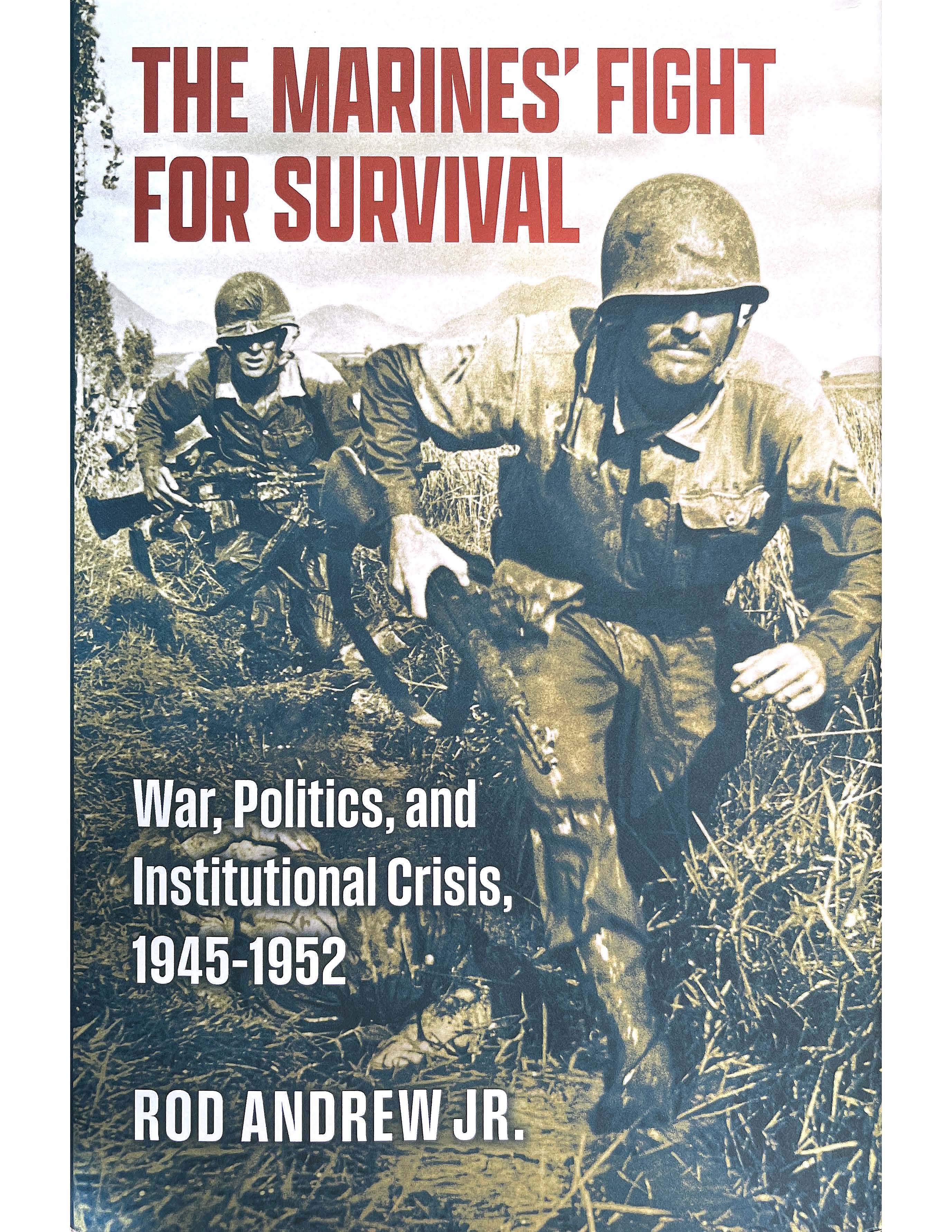
Retired USMC Colonel Rod Andrew, Jr.’s, newest book, “The Marines' Fight for Survival - War, Politics, and Institutional Crisis, 1945-1952,” explores a period when the that almost became a reality.
"The senior leadership of the Army and the Air force, like Eisenhower, Bradley and Marshall, were concerned that [the Marine Corps] was siphoning off resources that the Army and the Air Force needed and was getting too big for its britches. It was sort of overlapping with what they saw as the Army's role," Andrew said. "These other leaders wanted to make sure it never existed again, and so it was almost smothered in the cradle after 1945."
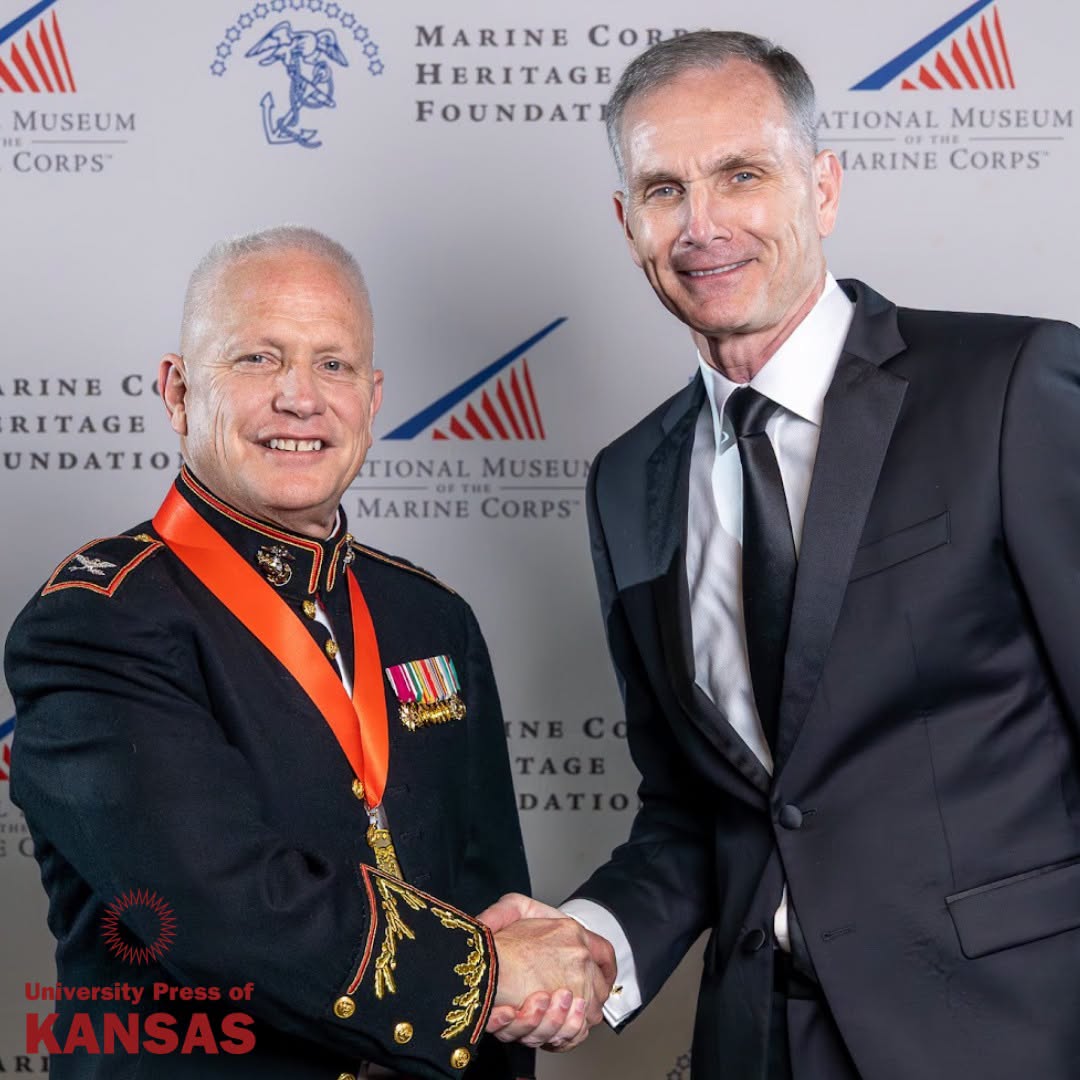
The book won the General Wallace M. Greene, Jr. Award. The book dives into the controversy, political challenges, and secretive maneuvers the Marine Corps had to endure as it fought to protect its existence and secure its legacy.
“It is a critical period in the Marine Corps history that has have not been studied and understood as much as it should be,” Andrew said.
Andrew became interested in the subject a decade ago after reading "Underdogs: The Making of the Modern Marine Corps" by Aaron O'Connell. In the book, O’Connell summarized up this period of the Corps’ history.
“The general American public knows nothing about this, remembers nothing about this period, and there's some memory of it in the Marine Corps, and some Marines know some of the story, but there was no one book out there that really explored it and explained it in detail with all the controversy and political wrangling and secretive maneuvers and leaked classified documents,” Andrews said.
About the author
Andrew graduated with his Ph.D. from Clemson University in 1997. Now, he continues to educate future generations of Tigers, teaching courses in in history, specializing in history of the American South and U.S. military history.
He was previously awarded the Mary Lawton Hodges Prize in Southern Studies in 2009 for his biography on Confederate general, planter and South Carolina Democrat Wade Hampton III. His biography of American Revolutionary War militia leader Andrew Pickens won the Harry M. Ward Book Award. Andrew’s article on Marine Corps Aviation, ““Flying Leathernecks,”: The Public Debate over Close Air Support and the Future of the Marine Corps, 1941-1952” won the General Roy S. Geiger Award this year as well.
Before his career in academia, Andrew served as an Active-Duty Marine Corps Artillery Officer during Desert Storm from 1987 – 1991. He went on to serve another 25 years in the Marine Corps Reserve, working in a Reserve Artillery Battalion, then as an instructor in the Marine Corps Enlisted Commissioning Education Program Preparatory School and most recently working to preserve the branches’ history as a Marine Corps Historian before retiring in 2017.
When writing his recent book, Andrew became more aware of the significance of what it means to be Marine.
“I think virtually every Marine picks up this conviction very early on, whether it's in boot camp or OCS or whatever, that they are inheriting a legacy that they themselves could really damage if they fail to live up to these you know super high standards of discipline and esprit de corps and fighting ability. It's just something that you carry around with you as a marine without fully examining it or thinking about where it comes from. But as I did the research for this book, I finally understood it better,” Andrew said.
Dedicated to bringing a light to key figures in our nation’s history, Andrew plans on writing his next book on the 19th Commandant of the Marine Corps, Clifton Bledsoe Cates. The General led the Marine Corps from 1948 - 1951.
“He was wounded six times in World War I and gassed once. He fought in World War II at [The Battle of] Tinian and Guam and Iwo Jima. He served in combat at every level of command, he commanded infantry units at every level from platoon, company, battalion, regiment, and division, and now suddenly he's the commandant, and he's away from combat units, and he's fighting political and bureaucratic battles to literally try to save the Marine Corps,” Andrew said.
The Future of the Marine Corps
As the Marine Corps looks into the future, focusing its attention on tensions in the Indochina Sea, it’s planning to reduce and restructure its workforce.
The Marine Corps’ Force 2030 plan aims to restructure its infantry, armor and aviation forces and aims to reduce the number of personnel by 12,000. The census is split between whether this is the right move.
“The Marine Corps trying to walk this tightrope between being broadly useful, trying to prove how useful it is, and not overlapping with the Army. I think the designers of Force 2030 … don't see themselves as trying to cripple the Marine Corps' abilities. In their eyes, they're trying to make it more economical, make it more relevant, less redundant with the Army,” Andrew said.
Critics, such as former commandants and many other retired senior officers believe that this move is making the Marine Corps less capable by eliminating its combined arms capabilities, according to Andrew.
“[Critics say], ‘No, we had to fight for that stuff, and it's still relevant. And we don't need to be rocketeers stranded on Pacific Islands. The Marine Corps needs to be able to go onto a hostile shore and punch somebody in the mouth, even if that does suggest that we have some overlap with Army armored, and combined arms capabilities,’” said Andrew.
It’s not certain what the Marine Corps will look like a half a century from now, what is certain is that their legacy of being, “First to fight for right and freedom,” continues.
Legal Disclaimer:
EIN Presswire provides this news content "as is" without warranty of any kind. We do not accept any responsibility or liability for the accuracy, content, images, videos, licenses, completeness, legality, or reliability of the information contained in this article. If you have any complaints or copyright issues related to this article, kindly contact the author above.
